



"Heavenly Palace" China Space Station
It is an independent space station composed of three modules, including the sky and core module, the sky test module and the dream test module. The design is designed to support long-term habitation, capable of accommodating at least three astronauts for at least 10 consecutive years. The design and construction are completely independent. Each module has an independent power supply, control, propulsion and measurement and control system. The assembly and construction are completed through rendezvous and docking and on-orbit plane transposition. It provides a "space home" for astronauts and a "space laboratory" for scientific research, supporting space science experiments and technological experiments in multidisciplinary fields.

Cabin Creek Meteorite
The Cabin Creek meteorite is a well-known iron meteorite that landed in Arkansas, United States, in 1886. It belongs to Class IIIAB iron meteorites with a mass of about 48.5kg. The directional landing characteristics of this meteorite are very obvious, with different depths of air marks and flow lines on the surface, and it maintains a fixed flight orientation when passing through the atmosphere.
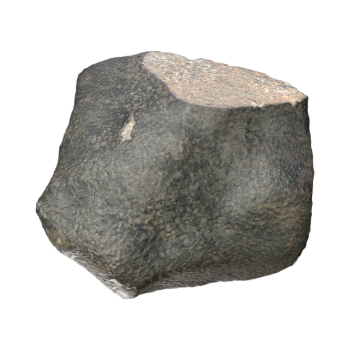
Stein meteorite
The Stein meteorite fell on May 22, 1808, in the Moravian village of Stonarov (known as Stein in German) in today's Czech Republic. This type of meteorite is classified as part of the HED meteorite family, possibly from asteroid 4 Vesta, and belongs to the gabbro achondrite subgroup.
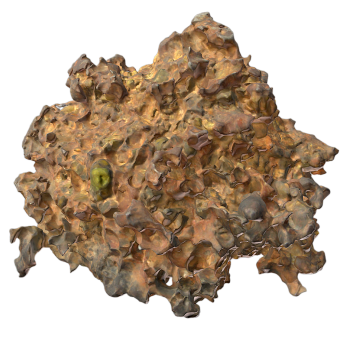
Krasnoyarsk meteorite
The Krasnojarsk meteorite is a famous type of stony iron meteorite, belonging to the Pallasite category. It was discovered in the Krasnoyarsk Krai of Russia in 1749. In 1749, local blacksmith Yakov Medvedev and mining foreman Yi Kai Metich discovered this meteorite about 145 miles south of Krasnoyarsk. In 1772, this meteorite was presented to scholar P.S. Pallas and was named after it.

Stannern meteorite
Stannern meteorite is a type of achondrite belonging to the HED meteorite, originating from asteroid 4 Vesta. The meteorite fell around 6am on May 22, 1808, in the village of Stona ř ov in Moravia, Czech Republic today. These meteorites are mainly composed of silicate minerals such as pyroxene and plagioclase, similar to basalt on Earth. The total weight of the meteorite is about 52 kilograms, with the largest fragment weighing 6 kilograms. This is the largest fragment preserved in the Vienna Museum of Natural History.

Halley's Comet
Halley's Comet (catalog number 1P/Halley) is a periodic comet that orbits the Sun once every 76.1 years and is visible to the naked eye. Named after British physicist Edmund Halley (1656-1742) who first measured its orbital data and successfully predicted its return time. The orbital period of Halley's Comet is 76-79 years, and its next perihelion will be on July 28, 2061. Halley's Comet is the first recorded periodic comet in human history, dating back to at least 240 BC or 466 BC. There are clear records of this comet appearing in China, ancient Babylon, and medieval Europe.
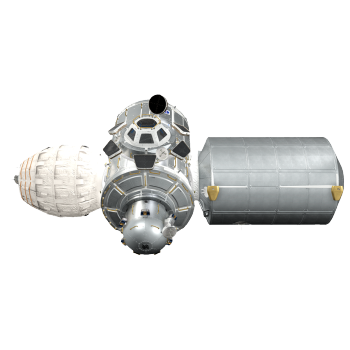
International Space Station Serenity Node Three
Node 3 Tranquility is a module of the International Space Station (ISS). It was launched by the Space Shuttle Endeavour on February 8, 2010 and docked with the International Space Station on February 12, 2010.

Lunar probe 25
In October 1998, Russian Academy of Sciences academician Galimov proposed the concept of conducting another lunar exploration mission after Luna 24 at the Moscow International Lunar Exploration Conference, which is regarded as the beginning of modern Russia's return to the moon program. However, based on budget constraints, the authorities have listed the Phobos Earth probe and the Spectral Astrophysics Observatory as higher priority tasks, and lunar exploration has been temporarily put on hold. In early 2018, the Space Research Institute of the Russian Academy of Sciences announced that the probe was scheduled to be launched in 2019 and a possible landing site had been selected.
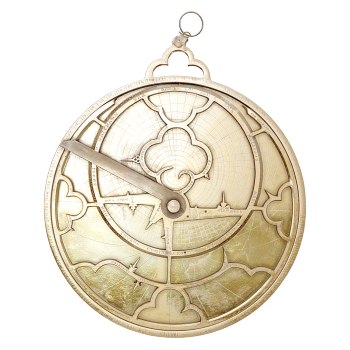
Medieval flat star chart
The star chart is an ancient astronomical instrument, which can be said to be a handheld model of the universe. Its various functions also make it a sophisticated inclinometer and an analog computing device capable of solving several problems in astronomy. In its simplest form, it is a metal disk with patterns of wires, cuts, and perforations, allowing users to accurately calculate the position of celestial bodies. Astronomers throughout history have used it to measure the height of celestial bodies on the horizon, both during the day and at night; It can be used to identify stars or planets, determine the local latitude at a given local time, measure or conduct triangulation.
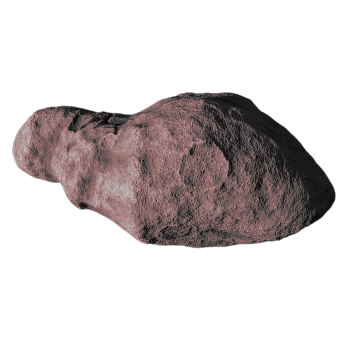
Tutatis asteroid
Toutatis, asteroid number 4179, is a slender rocky asteroid and slow-moving body classified as a potentially hazardous near Earth asteroid in the Apollo and Alinda groups, with a diameter of approximately 2.5 kilometers. In 1989, French astronomer Christian Pollas discovered this asteroid in Koussors, named after Toutatis in Celtic mythology. Tutotis approached Earth again in 2016, but there is no risk of impact before 2069.
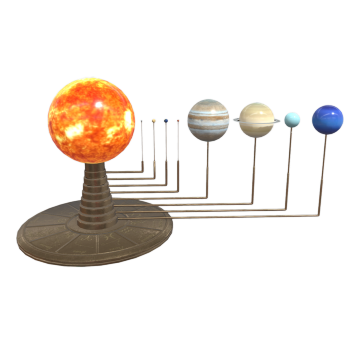
A moving solar system model (3D demonstration animation)
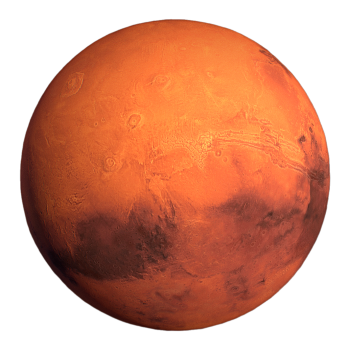
Mars captured by the Insight mission

Popular Models

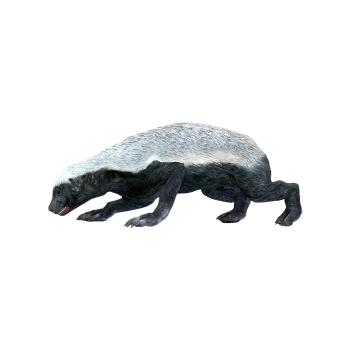
Honey Badger (3D animated model)
192 View
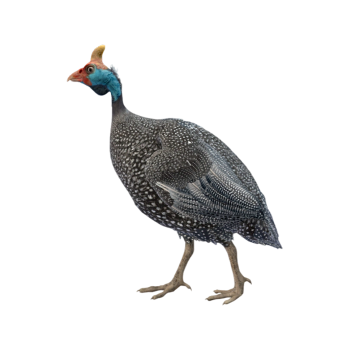
Guinea fowl (3D animated model)
163 View
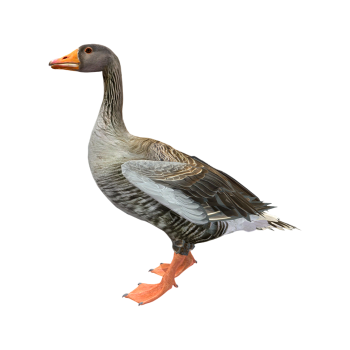
Wild Goose (3D animated model)
185 View
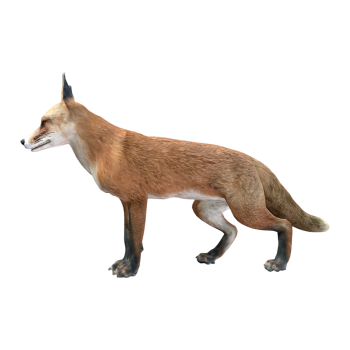
Red Fox (3D animated model)
153 View
Random Model

Japanese taro
611 View

Painted pottery plate relief
708 View

Vintage distressed newsboy hat
694 View

Gannet Specimen
619 View



Japan Mazda 323 sedan
581 View
